After working as producer on Blue Planet I & II, both of which were great successes, we set our sights even higher!
This project spanned only eight weeks from first contact to field deployment. During this incredibly short project, Argentum Systems initially converted our ideas into a two-part proof of concept – allowing us to win the bid. Watching us then rapidly progress from nothing to fully functional electronics was amazing, and the unexpected in-the-field configuration options were brilliant.
John Ruthven, Indoona Media
Customer Type: TV Production Company
Situation
Sperm Whales can dive for up to an hour at depths of over 3,000 meters in total darkness. Scientists sought new answers into their feeding habits – they produce repeated “clicks” at varying rates, perhaps as a form of sonar?
Working with the scientists, our customer was a TV production company – their conventional camera equipment cannot operate in these extremes, so they engaged Argentum Systems.
Problem
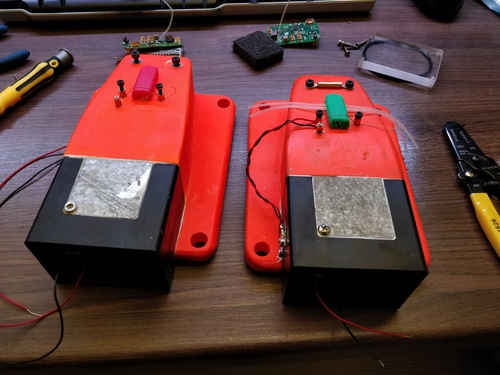
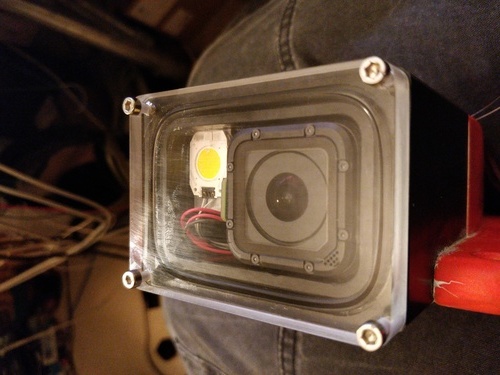
The challenges were many; including minimising stress for the whale – a camera tag like no other was needed. It had to be lightweight, compact, reliable and rugged, and capable of running for hours in darkness.
Innovative new design delivered camera power, audio, and lighting; ensuring operation over multiple dives, and crucially, footage retrieval.
Tag recovery is very costly due to the time involved, requiring rental of a large ship and crew.
Implication
Not addressing these issues meant scrapping vital scenes and scientific research questions remaining unanswered.
Simple “action camera and torch” solutions cannot manage control over the footage, runtime, lighting, tag release and thereby recovery costs.
Animal welfare concerns were raised regarding the whale’s hunting success due to the constant light.
Conventional release mechanisms are poorly timed, increasing tag retrieval costs and risking total loss and expedition failure.
Outcome
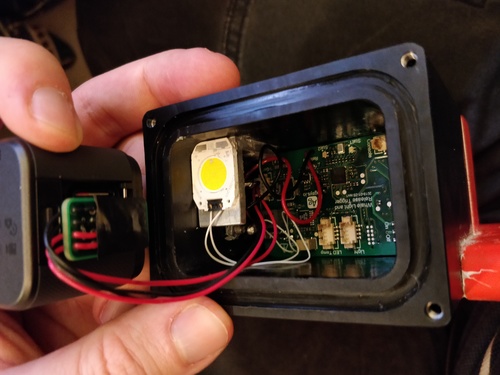
Argentum Systems devised a custom control system for the tag. Reducing the impact of lighting, controlling power to the camera, and precisely timing the tag’s release – ensuring faster and cheaper tag recovery.
The tag “listened” to the whale’s click pattern, activating lighting and cameras in the last moments of the hunt.
An electronic timer reduced retrieval costs using a novel release mechanism paired with a proven failsafe. Additionally, the camera was powered throughout multiple dives.
The groundbreaking tag was deployed in the seas near Dominica, encouraging further development and deep sea discoveries.
Technical Journey (hide)
For this project, Argentum Systems delivered a integrated solution involving both hardware and software design. There was no opportunity for iterative prototyping due to the incredibly short timescales involved before the equipment was required on location. A proof of concept was rapidly created to show the lighting control responding to audio recordings from previous expeditions. The light source used was so intense that it came with eye-safety warnings, requiring it's own heatsink.
Our customer presented novel concepts for use in the release mechanism, which we iterated upon and developed into a functional solution within days. This required a unique combination of physics and chemistry – creating new IP for our customer that could be employed in this and future expeditions.
Tight collaboration and parallel work streams between Argentum Systems, the customer and the camera tag's design team was necessary. Key considerations were the tag's overall weight (therefore buoyancy), and front profile (therefore drag).
Pre-deployment real world trials were impossible, therefore ongoing reconfiguration of the system must be possible whilst at sea, with minimal specialist effort. We had no second chances with this project – operational reliability of the system was critical, ensuring the system functioned exactly as designed.
Argentum Systems delivered all our customer's requirements on-time and within budget – the final integration session was exceptionally short. Decompression time was required afterwards!